
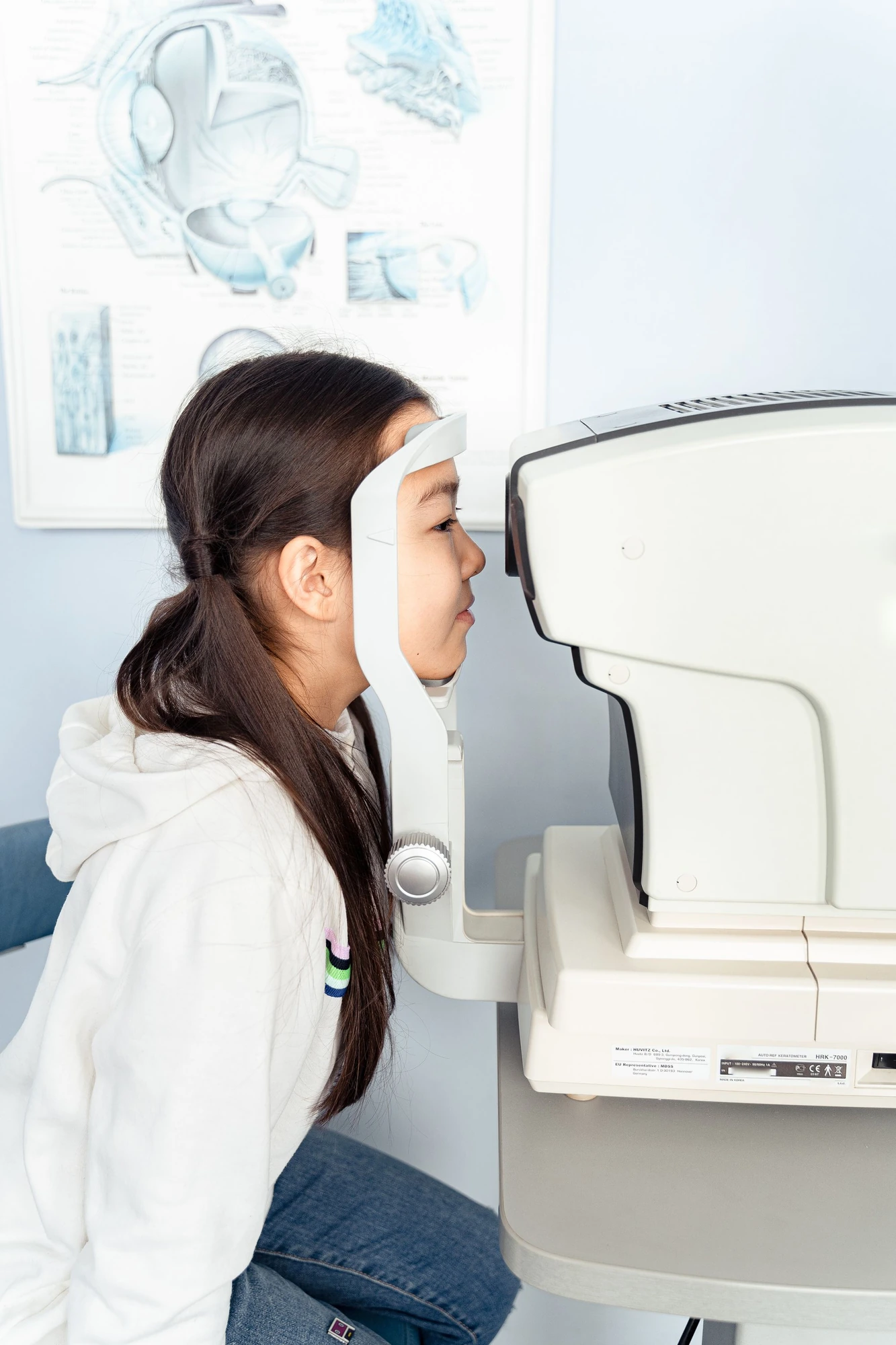
An eye appointment can involve a new room, unfamiliar equipment, close-up interaction, and instructions delivered quickly. Preparing an autistic child starts with finding out what will happen and telling the office how the child communicates. The aim is a useful clinical visit with as much predictability and dignity as possible.
This is a planning guide, not medical advice or an examination protocol. The clinician should determine which assessments are appropriate and explain the options to the family.
Call before the day of the exam
Ask what the visit usually includes and how long the family should allow. Explain anything that would help the team prepare: a preferred communication method, a concern about touch near the face, or difficulty waiting in a crowded space. Ask which requests the practice can accommodate rather than assuming that every office offers the same support.
The American Academy of Ophthalmology has published professional guidance on adapting eye examinations for nonverbal patients. A child’s inability to read letters aloud should be discussed with the clinician; it should not become a reason for a family to abandon the search for appropriate eye care.
Make a simple, honest preview
If your child finds previews helpful, describe only what the office has confirmed. A short sequence might be travel, check-in, meeting the clinician, the examination, and leaving. Avoid promising that nothing will be uncomfortable or that there will be no eye drops if you do not know.
Invite questions and make room for uncertainty. Some children may prefer photographs; others may want a spoken explanation, a written list, or very little advance discussion.
Keep communication available
Ask how the child can indicate stop, discomfort, or a need for a break. Bring their usual communication supports when possible and ask the office about any equipment restrictions. Address the child directly while also accepting relevant information from caregivers.
Plan for what comes afterward
Before leaving, ask the clinician to explain the findings, any recommended next steps, and whom to contact with questions. If the examination could not be completed, ask what another attempt or referral might involve. A partial visit is information to plan from, rather than a judgment about a child’s effort.
A workable appointment respects both the purpose of the examination and the person taking part. Clear communication before, during, and after the visit can help families and clinicians build that plan together.
Sources & further reading
Reporting checked October 20, 2026. Service details and event availability can change.
Photograph: Antoni Shkraba / Pexels · Pexels License. Resized and converted to WebP; previews may crop the image.